Nubeqa® Darolutamide
DEAR Study
SUMMARY
The DEAR study is a retrospective chart review study (N=870) which evaluated the real-world use and outcomes of darolutamide (n=362), enzalutamide (n=382), and apalutamide (n=126) in patients with non-metastatic castration-resistant prostate cancer (nmCRPC).1
- A lower proportion of patients in the darolutamide group (37.0%) reached the composite endpoint of treatment discontinuation or progression to mCRPC compared to enzalutamide (52.6%) and apalutamide (52.4%) groups. Darolutamide-treated patients had a 33.8% (adjusted hazard ratio [HR], 0.66 [95% confidence interval (CI), 0.53-0.84]) and 35.1% (HR, 0.65 [95% CI, 0.48-0.88]) reduced risk of reaching the composite endpoint compared to enzalutamide and apalutamide, respectively.
- A lower proportion of patients in the darolutamide group (30.4%) discontinued treatment compared to the enzalutamide (40.8%) and apalutamide (46.0%) groups. Darolutamide-treated patients had a 27.4% (HR, 0.73 [95% CI, 0.56-0.94]) and 39.1% (HR, 0.61 [95% CI, 0.44-0.85]) reduced risk of treatment discontinuation compared with enzalutamide and apalutamide, respectively. The most common reason for treatment discontinuation was adverse events (AEs; darolutamide, 10.2%; enzalutamide, 14.4%; apalutamide, 15.1%).
- A lower proportion of patients in the darolutamide group (17.7%) progressed to metastatic castration-resistant prostate cancer (mCRPC) compared to the enzalutamide (28.3%) and apalutamide (27.8%) groups. Darolutamide-treated patients had a 40.6% (HR, 0.59 [95% CI, 0.43-0.82]) and 35.3% (HR, 0.65 [95% CI, 0.42-0.99]) reduced risk of progression to mCRPC compared with enzalutamide and apalutamide, respectively.
- A lower proportion of darolutamide-treated patients (24.9%) had AEs compared to enzalutamide (29.3%) or apalutamide (30.2%).
This page is intended for US healthcare professionals and may contain information outside ofthe approved prescribing information. It is provided in response to an unsolicited request. It is not intended as an endorsement ofany usage not contained in the Prescribing Information. This response should be reviewed together with the current full Prescribing Information (including Boxed Warning) and Medical Safety Summary. These materials contain the approved indications, contraindications, warnings and precautions, adverse reactions, and other important safety information for Nubeqa® (Darolutamide)
Nubeqa is an androgen receptor inhibitor indicated for the treatment of adult patients with non-metastatic castration-resistant prostate cancer (nmCRPC), metastatic castration-sensitive prostate cancer (mCSPC), and metastatic castration-sensitive prostate cancer (mCSPC) in combination with docetaxel.
- The DEAR-EXT study (N=1375) provides a 1-year longer inclusion and follow-up period to DEAR (darolutamide, n=565; enzalutamide, n=609; apalutamide, n=201). 2
- A lower proportion of patients in the darolutamide group (37.3%) discontinued treatment compared to the enzalutamide (49.4%) and apalutamide (49.3%) groups. Darolutamide-treated patients had a 27% (HR, 0.732 [95% CI, 0.608-0.882)] and 31% (HR, 0.693 [95% CI, 0.542-0.885]) reduced risk of treatment discontinuation compared with enzalutamide and apalutamide, respectively. The most common reason for treatment discontinuation was disease progression/death (darolutamide, 15%; enzalutamide, 19%; apalutamide, 18%).
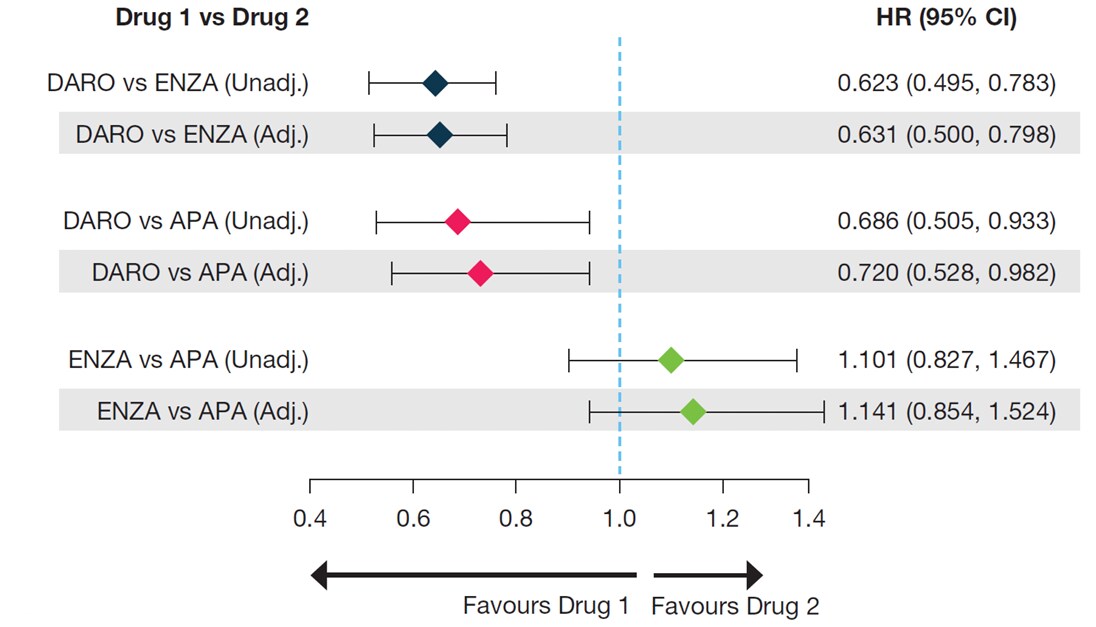
- A lower proportion of patients in the darolutamide group (22.7%) progressed to mCRPC compared to the enzalutamide (32.2%) and apalutamide (31.3%) groups. Darolutamide-treated patients had a 37% (HR, 0.631 [95% CI, 0.500-0.798]) and 28% (HR, 0.720 [95% CI, 0.528-0.982]) reduced risk of progression to mCRPC compared with enzalutamide and apalutamide, respectively.
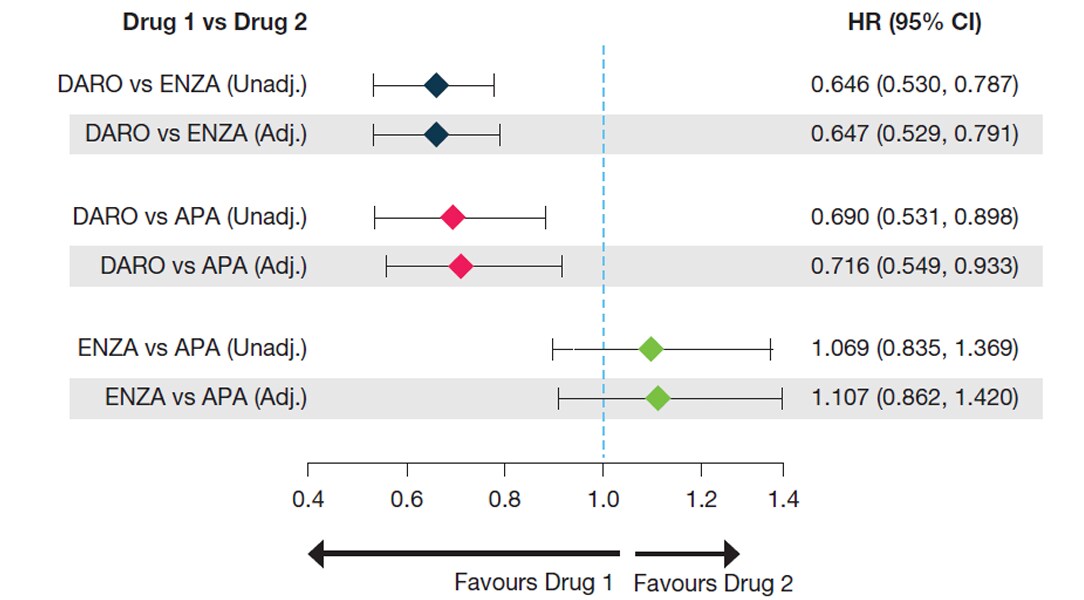
- Metastasis-free survival (MFS) was analyzed. Darolutamide-treated patients had a 35% (HR, 0.647 [95% CI, 0.529-0.791]) and 28% (HR, 0.716 [95% CI, 0.549-0.933]) reduced risk of metastasis or death compared with enzalutamide and apalutamide, respectively.
- Prostate-specific antigen (PSA) response rates, and overall survival (OS) probabilities at 12, 24, and 36 months were higher for darolutamide vs enzalutamide and apalutamide.
- A lower proportion of darolutamide-treated patients (25.1%) had treatment-emergent AEs (TEAEs) compared to enzalutamide (28.4%) and apalutamide (29.9%).
- A subgroup analysis by race (White vs Black race) has been conducted.3
BACKGROUND
- At present, no prospective, randomized, head-to-head clinical trials have been conducted to compare the efficacy and safety of darolutamide and other androgen receptor inhibitors.
- Real-world evidence is derived from the analysis of data regarding the usage and potential benefits or risks of a medical product in routine clinical practice. Such data can be obtained from electronic health records, product and disease registries, or patient-generated data sources.4 It can be used to evaluate treatment utilization patterns, clinical outcomes and comparative effectiveness and safety between different treatments. Limitations include: data not being standardized for research purposes, absence of randomization, confounding factors unmeasured at baseline, and the inability to determine causation, only association. As such, results should be interpreted considering these limitations.5-7
CLINICAL DATA
DEAR Study
George, et al (2024)1 reported results from the DEAR study (Real-world use of Darolutamide, Enzalutamide, and Apalutamide for non-metastatic castration-Resistance prostate cancer; NCT05362149), a retrospective chart review cohort study using electronic medical records from community urology practices in the US to assess the real-world utilization and outcomes of darolutamide, enzalutamide, and apalutamide in patients with nmCRPC.
Study Design/Methods
- Using the electronic medical record data from the Precision Point Specialty network of community US urology practices, a total of 870 patients were identified and included in this study. Patients were aged ≥18 years, diagnosed with nmCRPC and initiated first androgen receptor inhibitor (ARI) therapy with darolutamide (n=362), enzalutamide (n=382), or apalutamide (n=126), between 1 August 2019 (the index date in Figure: Study Design of DEAR Study) and 31 March 2022.
- Exclusion criteria were: evidence of metastatic disease before or up to 30 days after the index date, history of other primary cancers (except non-melanoma skin cancer) in the 5 years prior to the index date, or evidence of inclusion in clinical trials during the study.
- The overall study design is presented in Figure: Study Design of DEAR Study. The follow-up period included the time from index date (ARI initiation) until the date of last electronic medical record activity, the end of the study period, or death; whichever occurred first.
Figure. Study Design of DEAR Study8
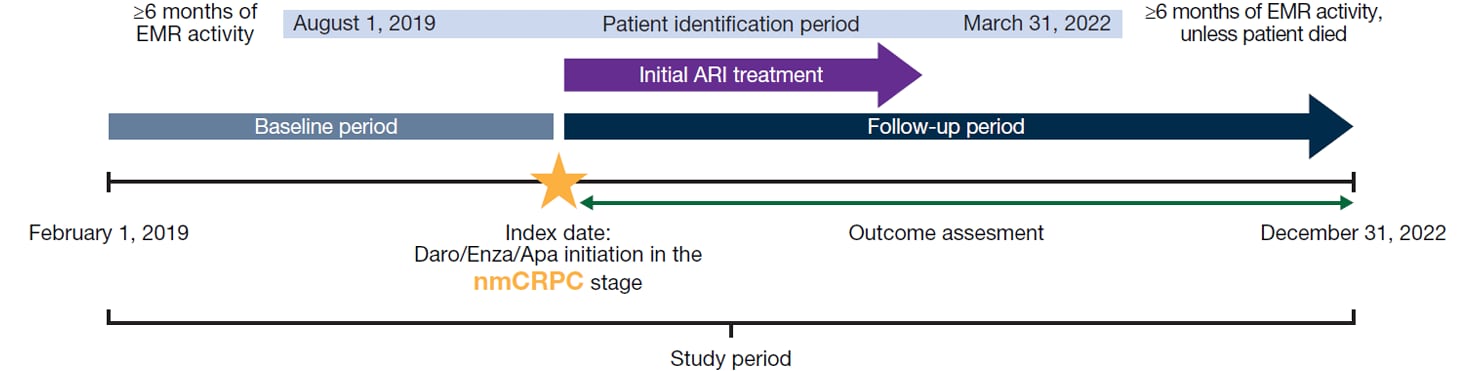
Key: Apa, apalutamide; daro, darolutamide; EMR, electronic medical records; Enza, enzalutamide; nmCRPC, non-metastatic castration-resistant prostate cancer.
Figure was published as Fig. 1 in Morgans A, Shore N, Khan N, et al. Comparative real-world evidence on darolutamide, enzalutamide, and apalutamide for nonmetastatic castration-resistant prostate cancer patients in the United States (DEAR). Poster presented at: American Society of Clinical Oncology (ASCO) Annual Meeting; June, 2-6, 2023; Chicago, IL. [downloaded 15 January 2026] Copyrights remain with the original source or as denoted therein.
- Outcomes assessed in the DEAR study included: a composite endpoint of ARI discontinuation or progression to mCRPC; ARI discontinuation (as a separate endpoint) and the reasons for ARI discontinuation; progression to mCRPC (as a separate endpoint) and the time to progression to mCRPC; AE incidence (including AEs of special interest).1,9
- Cox proportional hazards models were used to compare time to the composite endpoint, time to ARI discontinuation, and time to progression to mCRPC between treatment cohorts, before and after adjusting for the following observed baseline factors: Age, race, insurance coverage, index period, baseline prostate-specific antigen (PSA), baseline PSA doubling time (PSADT), time from nmCRPC diagnosis to index date, and Gleason score.
- Sensitivity analyses using inverse probability of treatment weighting (IPTW) were conducted for ARI discontinuation and progression to mCRPC, applying propensity scores to weight the patients.
Results
Patient Characteristics
- Patient baseline characteristics, demographics, and duration of follow-up are presented in Table: Patient Baseline Characteristics and Demographics in DEAR. Statistically significant differences among the 3 cohorts were identified for PSADT (more patients initiating enzalutamide had missing PSADT than the other cohorts) and index period (more patients initiated enzalutamide therapy in the first 2 years compared to the other cohorts).
Table. Patient Baseline Characteristics and Demographics in DEAR1
| Characteristic | Darolutamide (n=362) | Enzalutamide (n=382) | Apalutamide (n=126) | P-value |
| Age, years | ||||
| Median (range) | 80 (53-98) | 79 (55-99) | 80 (52-96) | 0.77 |
| Mean (SD) | 79.0 (8.5) | 78.6 (8.9) | 79.2 (8.8) | |
| Age group, years, n (%) | ||||
| ≤74 | 109 (30.1) | 118 (30.9) | 36 (28.6) | 0.99 |
| 75-84 | 154 (42.5) | 160 (41.9) | 56 (44.4) | |
| ≥85 | 99 (27.3) | 104 (27.2) | 34 (27.0) | |
| Race, n (%) | ||||
| White | 238 (65.7) | 254 (66.5) | 93 (73.8) | 0.36 |
| Black/African American | 80 (22.1) | 82 (21.5) | 25 (19.8) | |
| Other or unknowna | 44 (12.2) | 46 (12.0) | 8 (6.3) | |
| Insurance coverage, n (%) | ||||
| Commercial | 103 (28.5) | 88 (23.0) | 32 (25.4) | 0.07 |
| Public | 247 (68.2) | 287 (75.1) | 94 (74.6) | |
| Unknown | 12 (3.3) | 7 (1.8) | 0 | |
| Index period, n (%) | ||||
| 2019-2020 | 203 (56.1) | 255 (66.8) | 73 (57.9) | 0.009 |
| 2021-2022 | 159 (43.9) | 127 (33.2) | 53 (42.1) | |
| PSAb level, ng/mL | ||||
| Median (range) | 3.3 (0-321.4) | 3.6 (0-417.0) | 3.4 (0-114.2) | 0.85 |
| Mean (SD) | 9.4 (24.9) | 12.4 (38.5) | 8.7 (16.8) | |
| PSAb group, ng/mL, n (%) | ||||
| <2.0 | 127 (35.1) | 134 (35.1) | 47 (37.3) | 0.17 |
| ≥2.0 and <10.0 | 148 (40.9) | 135 (35.3) | 48 (38.1) | |
| ≥10.0 | 65 (18.0) | 76 (19.9) | 27 (21.4) | |
| Missing | 22 (6.1) | 37 (9.7) | 4 (3.2) | |
| PSADTc, months | ||||
| Median (range) | 6.8 (0-100.0) | 6.4 (0.6-100.0) | 7.4 (1.2-100.0) | 0.19 |
| Mean (SD) | 9.9 (11.3) | 13.4 (21.4) | 11.8 (17.2) | |
| PSADT groupc, months, n (%) | ||||
| ≤6 | 120 (33.1) | 119 (31.2) | 37 (29.4) | 0.02 |
| >6 and ≤10 | 64 (17.7) | 51 (13.4) | 31 (24.6) | |
| >10 | 85 (23.5) | 81 (21.2) | 28 (22.2) | |
| Missing | 93 (25.7) | 131 (34.3) | 30 (23.8) | |
| Gleason score at initial PC diagnosisd, n (%) | ||||
| 4-7 | 161 (44.5) | 139 (36.4) | 45 (35.7) | 0.08 |
| 8-10 | 133 (36.7) | 153 (40.1) | 58 (46.0) | |
| Missing | 68 (18.8) | 90 (23.6) | 23 (18.3) | |
| Time from nmCRPC to index date, months | ||||
| Median (range) | 5.3 (0-247.9) | 3.4 (0-130.0) | 6.5 (0-131.2) | 0.08 |
| Mean (SD) | 14.8 (24.6) | 13.3 (22.2) | 14.9 (21.5) | |
| Follow-up, months | ||||
| Median (range) | 22.2 (2.2-40.3) | 22.7 (0.9-41.5) | 23.3 (2.6-41.7) | 0.80 |
| Mean (SD) | 22.8 (8.7) | 23.1 (10.2) | 23.5 (10.9) | |
| Patients starting at approved ARI dosee, n (%) | ||||
| Yes | 351 (97.0) | 360 (94.2) | 124 (98.4) | 0.05 |
| No | 11 (3.0) | 22 (5.8) | 2 (1.6) | |
| Key: ARI, androgen receptor inhibitor; EMR, electronic medical record; nmCRPC, non-metastatic castration-resistant prostate cancer; PC, prostate cancer; PSA, prostate-specific antigen; PSADT, prostate-specific antigen doubling time. aIncludes self-reported American Indian or Alaska Native, Hispanic or Latino, other race, and not reported. bValues closest to index date (darolutamide, n=340; enzalutamide, n=345; apalutamide, n=122). cPSADT is calculated using the Sloan Kettering methodology, which is based on ≥3 PSA values ≥0.2 ng/mL taken ≥1 month apart, within the 12 months prior to index date (darolutamide, n=269; enzalutamide, n=251; apalutamide, n=96). PSADT values after 100 months were capped at 100 for 13 patients. dHigher scores indicate higher cancer grade. eDarolutamide, 1200 mg; enzalutamide, 160 mg; apalutamide, 240 mg. | ||||
Table was adapted from Table. Patient Demographics and Baseline Characteristics in George DJ, Morgans AK, Constantinovici N, et al. Androgen Receptor Inhibitors in Patients With Nonmetastatic Castration-Resistant Prostate Cancer. JAMA Netw Open. 2024;7(8):e2429783. PMID: 39190308 https://www.ncbi.nlm.nih.gov/pubmed/39190308 [downloaded 15 January 2026] Copyrights remain with the original source or as denoted therein.
Outcomes
- A lower proportion of patients in the darolutamide group (37.0%) reached the composite endpoint of treatment discontinuation or progression to mCRPC compared to enzalutamide (52.6%) and apalutamide (52.4%) groups.
- In a Cox proportional hazards model adjusting for baseline factors, darolutamide-treated patients had a 33.8% (HR, 0.66 [95% CI, 0.53-0.84]) and 35.1% (HR, 0.65 [95% CI, 0.48-0.88]) reduced risk of reaching the composite endpoint compared to enzalutamide and apalutamide, respectively. The HR for time to the composite endpoint of enzalutamide compared to apalutamide was 0.98 (95% CI, 0.73-1.31).
- A lower proportion of patients in the darolutamide group (30.4%) discontinued treatment compared to the enzalutamide (40.8%) and apalutamide (46.0%) groups.
- In a Cox proportional hazards model adjusting for baseline factors, darolutamide-treated patients had a 27.4% (HR, 0.73 [95% CI, 0.56-0.94]) and 39.1% (HR, 0.61 [95% CI, 0.44-0.85]) reduced risk of treatment discontinuation compared with enzalutamide and apalutamide, respectively. The HR for treatment discontinuation of enzalutamide compared to apalutamide was 0.84 (95% CI, 0.61-1.15).
- In the IPTW analysis, darolutamide-treated patients had a 25.5% (HR, 0.75 [95% CI, 0.58-0.96]) and 37.0% (HR, 0.63 [95% CI, 0.46-0.87]) reduced risk of discontinuation compared with enzalutamide and apalutamide, respectively.
- The two most common reasons for treatment discontinuation (darolutamide vs enzalutamide vs apalutamide) included AEs (10.2% vs 14.4% vs 15.1%) and progression to mCRPC/death (8.3% vs 12.0% vs 13.5%). Other reasons included switching to another ARI, cost/reimbursement factors, other, and unknown.
- A lower proportion of patients in the darolutamide group (17.7%) progressed to mCRPC compared to the enzalutamide (28.3%) and apalutamide (27.8%) groups.
- In a Cox proportional hazards model adjusting for baseline factors, darolutamide-treated patients had a 40.6% (HR, 0.59 [95% CI, 0.43-0.82]) and 35.3% (HR, 0.65 [95% CI, 0.42-0.99]) reduced risk of progression to mCRPC compared with enzalutamide and apalutamide, respectively. The HR for time to mCRPC of enzalutamide compared to apalutamide was 1.09 (95% CI, 0.73-1.63).
- In the IPTW analysis, darolutamide-treated patients had a 39.6% (HR, 0.60 [95% CI, 0.44-0.83]) and 31.9% (HR, 0.68 [95% CI, 0.44-1.04]) reduced risk of progression to mCRPC compared with enzalutamide and apalutamide, respectively.
- A lower proportion of darolutamide-treated patients (24.9%) had AEs compared to enzalutamide (29.3%) or apalutamide (30.2%) (Table: AEs).
Table. AEs10
| AEa, n (%) | Darolutamide (n=362) | Enzalutamide (n=382) | Apalutamide (n=126) |
| Any AE | 90 (24.9) | 112 (29.3) | 38 (30.2) |
| AEs of special interest | 54 (14.9) | 67 (17.5) | 28 (22.2) |
| Fatigue | 41 (11.3) | 53 (13.9) | 14 (11.1) |
| Rash | 8 (2.2) | 3 (0.8) | 10 (7.9) |
| Cognitive and memory impairment | 5 (1.4) | 8 (2.1) | 3 (2.4) |
| Fall | 3 (0.8) | 5 (1.3) | 1 (0.8) |
| Hypertension | 1 (0.3) | 3 (0.8) | 0 |
| Fracture | 0 | 0 | 0 |
| Key: AE, adverse event; ARI, androgen receptor inhibitor; CNS, central nervous system. aAEs recorded during each ARI treatment and up to 30 days after discontinuation. Some patients experienced multiple AEs | |||
Table was adapted from Table. 2 in Supplement to: George DJ, Morgans AK, Constantinovici N, et al. Androgen Receptor Inhibitors in Patients With Nonmetastatic Castration-Resistant Prostate Cancer. JAMA Netw Open. 2024;7(8):e2429783. PMID: 39190308 https://www.ncbi.nlm.nih.gov/pubmed/39190308 [downloaded 15 January 2026] Copyrights remain with the original source or as denoted therein.
DEAR-EXT Study
George, et al (2024)2 reported results from DEAR-EXT, the 1-year extension of DEAR with 3 additional endpoints (PSA response, MFS, and OS). George, et al (2025)3 reported results of the race subgroup analysis.
Study Design/Methods
- DEAR-EXT study is an expansion of DEAR with 1 year additional inclusion and follow-up.2 The inclusion and exclusion criteria were the same as for DEAR. Patients were included between 01 August 2019 – 31 March 2023 (Figure: Study Design of DEAR-EXT Study).
Figure. Study Design of DEAR-EXT Study2
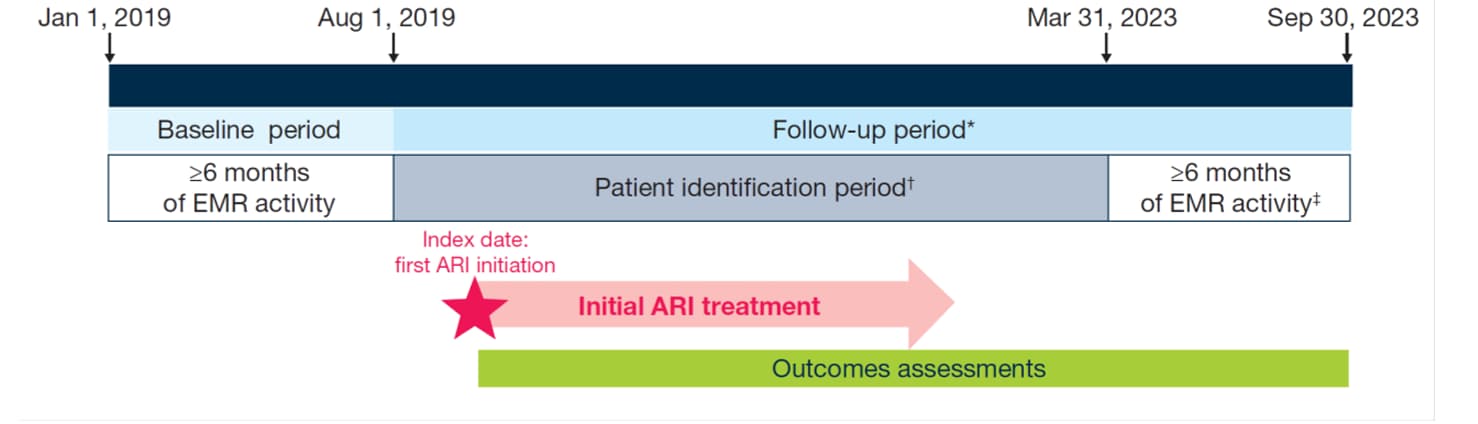
Key: ARI, androgen receptor inhibitor; EMR, electronic medical records.
*Follow-up period: time from index date until date of last EMR activity, end of study period, or death, whichever occurred earliest.
†Patient identification and outcomes assessments based on EMR data provided by Precision Point Specialty Analytics, supplemented with information retrieved from patient charts.
‡Unless the patient died sooner than 6 months from the index date.
Figure was published as Fig. 1 in George D, Morgans A, Khan N, et al. US real-world utilization and outcomes of darolutamide, enzalutamide, and apalutamide for nonmetastatic castration-resistant prostate cancer (nmCRPC): DEAR-EXT study. Poster presented at: American Society of Clinical Oncology (ASCO) Quality Care Symposium (QCS) Annual Meeting; September, 27-28, 2024; San Francisco, CA. [downloaded 15 January 2026] Copyrights remain with the original source or as denoted therein.
- In addition to the endpoint evaluated in DEAR, PSA response rate (decrease of ≥90% from the baseline level [PSA90]), MFS, and OS were assessed.
Results
Patient Characteristics
- Patient characteristics of the 1375 patients included in DEAR-EXT are summarized in Table: Patient Baseline Characteristics and Demographics in DEAR-EXT.
Throughout the study, a decrease was observed in the number of patients with nmCRPC who initiated any ARI treatment (2020, n=473; 2022, n=273), an increase was observed in the proportion of patients starting darolutamide (41% to 50%), a decrease was observed in the proportion of patients starting enzalutamide (46% to 36%), and the use of apalutamide remained relatively constant (13% to 15%).
Table. Patient Baseline Characteristics and Demographics in DEAR-EXT2
| Characteristic | Darolutamide (n=565) | Enzalutamide (n=609) | Apalutamide (n=201) |
| Age, median (IQR), years | 80 (73-85) | 79 (73-85) | 80 (72-85) |
| Race, n (%) | |||
| White | 375 (66.4) | 407 (66.8) | 141 (70.1) |
| Black | 116 (20.5) | 125 (20.5) | 41 (20.4) |
| Othera | 74 (13.1) | 77 (12.6) | 19 (9.5) |
| Insurance coverage, n (%) | |||
| Commercial | 149 (26.4) | 146 (24.0) | 58 (28.9) |
| Public | 380 (67.3) | 441 (72.4) | 141 (70.1) |
| Unknown | 36 (6.4) | 22 (3.6) | 2 (1.0) |
| Index year, n (%) | |||
| 2019 (Aug-Dec) – 2020 | 240 (42.5) | 337 (55.3) | 102 (50.7) |
| 2021-2023 (Jan-Mar) | 325 (57.5) | 272 (44.7) | 99 (49.3) |
| Gleason score at initial PC diagnosis, n (%) | |||
| <8 | 262 (46.4) | 223 (36.6) | 78 (38.8) |
| ≥8 | 211 (37.3) | 233 (38.3) | 89 (44.3) |
| Missing | 92 (16.3) | 153 (25.1) | 34 (16.9) |
| Time from CRPC diagnosis to index date, median (IQR), months | 4.7 (1.2-15.4) | 3.4 (0.4-15.0) | 3.9 (0.4-13.4) |
| PSA, median (IQR), ng/mL | 2.9 (1.1-7.0) | 3.2 (1.0-8.5) | 3.2 (1.0-7.1) |
| PSADT, median (IQR), months | 7.8 (4.7-12.5) | 6.9 (3.8-12.9) | 7.4 (4.5-11.1) |
| Patients starting at approved ARI doseb, n (%) | 549 (97.2) | 584 (95.9) | 199 (99.0) |
| Follow-up, median (IQR), months | 26.2 (18.0-36.5) | 26.2 (15.1-38.6) | 25.5 (16.9-38.6) |
| Key: ARI, androgen receptor inhibitor; CRPC, castration-resistant prostate cancer; IQR, interquartile range; PSA, prostate-specific antigen; PSADT, prostate-specific antigen doubling time aIncludes American Indian or Alaska Native, Hispanic or Latino, Native Hawaiian or other Pacific Islander, and unknown or unspecified other race. bApproved doses are: darolutamide, 1200 mg; enzalutamide, 160 mg; and apalutamide, 240 mg. | |||
Table was adapted from Table. 1 in George D, Morgans A, Khan N, et al. US real-world utilization and outcomes of darolutamide, enzalutamide, and apalutamide for nonmetastatic castration-resistant prostate cancer (nmCRPC): DEAR-EXT study. Poster presented at: American Society of Clinical Oncology (ASCO) Quality Care Symposium (QCS) Annual Meeting; September, 27-28, 2024; San Francisco, CA. [downloaded 15 January 2026] Copyrights remain with the original source or as denoted therein.
Outcomes
- A lower proportion of patients in the darolutamide group (37.3%) discontinued treatment compared to the enzalutamide (49.4%) and apalutamide (49.3%) groups. Median time to discontinuation for darolutamide, enzalutamide, and apalutamide, respectively, was NR, 27.6 months (95% CI, 23.9-35.6), and 26.8 months (95% CI, 22.6-42.8) (Figure: Time to Discontinuation).
- In a Cox proportional hazards model adjusting for baseline factors, darolutamide-treated patients had a 27% (HR, 0.732 [95% CI, 0.608-0.882)] and 31% (HR, 0.693 [95% CI, 0.542-0.885]) reduced risk of treatment discontinuation compared with enzalutamide and apalutamide, respectively. The HR for time to treatment discontinuation of enzalutamide compared to apalutamide was 0.946 (95% CI, 0.750-1.193) (Figure: Unadjusted and Adjusted Cox Proportional Hazards Models for Risk of Discontinuation).
- Reasons for treatment discontinuation (darolutamide vs enzalutamide vs apalutamide) included TEAEs (10% vs 15% vs 15%) and disease progression/death (15% vs 19% vs 18%).
Figure. Time to Discontinuationa2
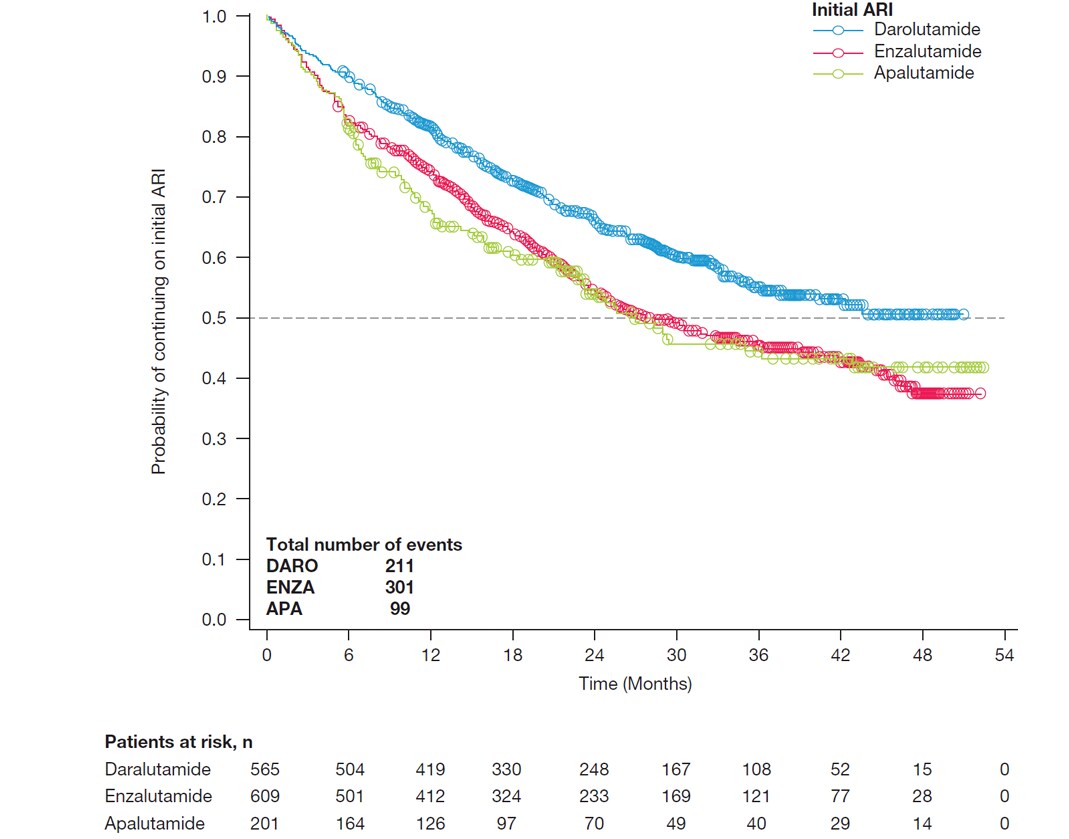
Key: APA, apalutamide; ARI, androgen receptor inhibitor; DARO, darolutamide; ENZA, enzalutamide.
aDiscontinuation defined as initial ARI treatment stop, treatment interruption of >60 days, switch to another ARI, or death.
Figure was published as Fig. 2 in George D, Morgans A, Khan N, et al. US real-world utilization and outcomes of darolutamide, enzalutamide, and apalutamide for nonmetastatic castration-resistant prostate cancer (nmCRPC): DEAR-EXT study. Poster presented at: American Society of Clinical Oncology (ASCO) Quality Care Symposium (QCS) Annual Meeting; September, 27-28, 2024; San Francisco, CA. [downloaded 15 January 2026] Copyrights remain with the original source or as denoted therein.
Figure. Unadjusted and Adjusted Cox Proportional Hazards Models for Risk of Discontinuationa2
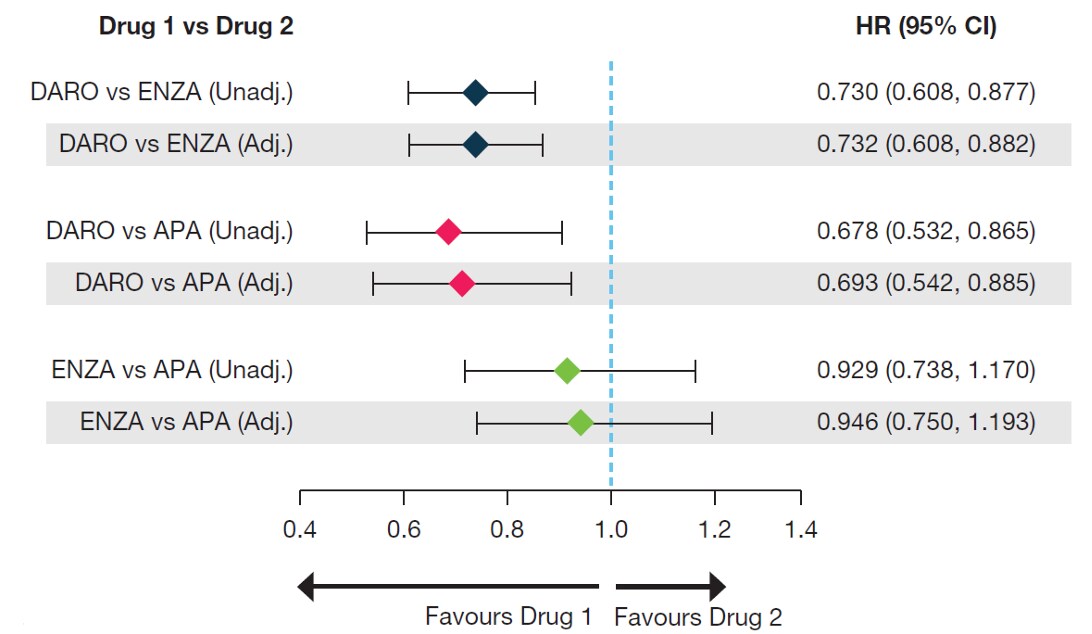
Key: APA, apalutamide; CI, confidence interval; DARO, darolutamide; ENZA, enzalutamide; HR, hazard ratio.
aDiscontinuation defined as initial ARI treatment stop, treatment interruption of >60 days, switch to another ARI, or death.
Figure was published as Fig. 2 in George D, Morgans A, Khan N, et al. US real-world utilization and outcomes of darolutamide, enzalutamide, and apalutamide for nonmetastatic castration-resistant prostate cancer (nmCRPC): DEAR-EXT study. Poster presented at: American Society of Clinical Oncology (ASCO) Quality Care Symposium (QCS) Annual Meeting; September, 27-28, 2024; San Francisco, CA. [downloaded 15 January 2026] Copyrights remain with the original source or as denoted therein.
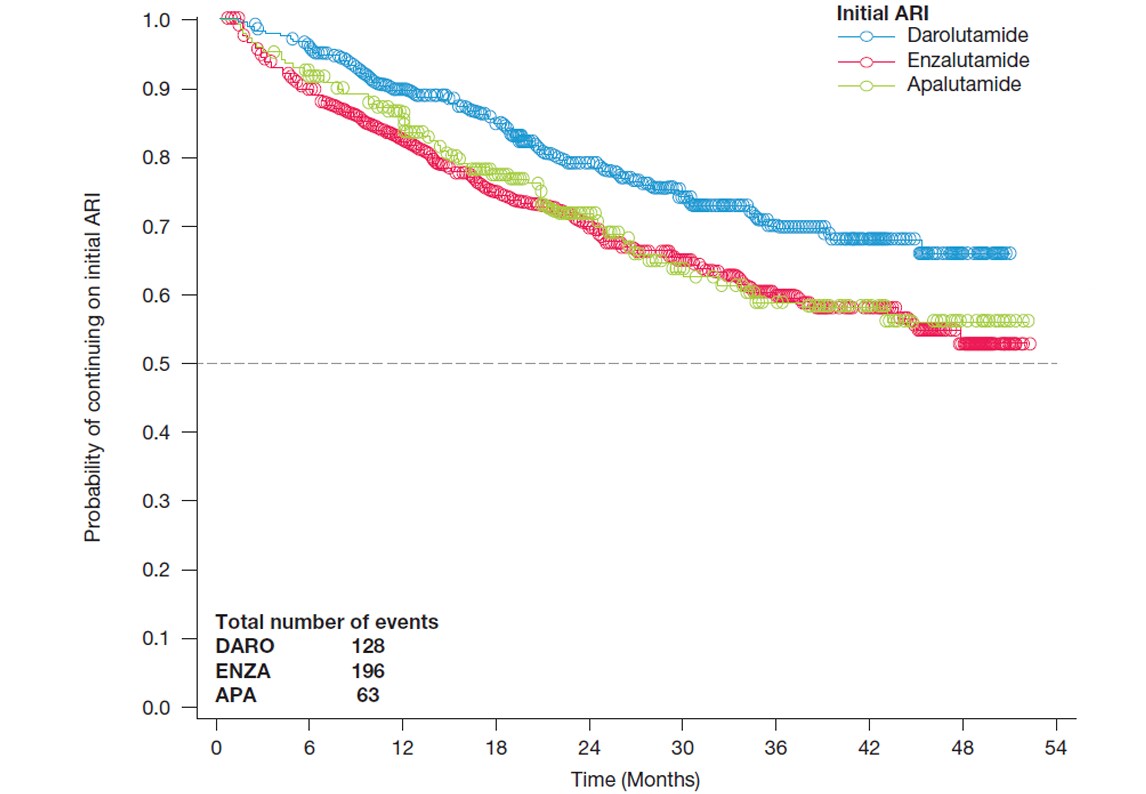
- A lower proportion of patients in the darolutamide group (22.7%) progressed to mCRPC compared to the enzalutamide (32.2%) and apalutamide (31.3%) groups (Figure: Time to mCRPC).
- In a Cox proportional hazards model adjusting for baseline factors, darolutamide-treated patients had a 37% (HR, 0.631 [95% CI, 0.500-0.798]) and 28% (HR, 0.720 [95% CI, 0.528-0.982]) reduced risk of progression to mCRPC compared with enzalutamide and apalutamide, respectively. The HR for time to progression to mCRPC of enzalutamide compared to apalutamide was 1.141 (95% CI, 0.854-1.524) (Figure: Unadjusted and Adjusted Cox Proportional Hazards Models for Progression to mCRPC).
Figure. Time to mCRPCa2
Key: APA, apalutamide; ARI, androgen receptor inhibitor; DARO, darolutamide; ENZA, enzalutamide.
amCRPC defined by recorded evidence of metastases or use of mCRPC treatment.
Figure was published as Fig. 3 in George D, Morgans A, Khan N, et al. US real-world utilization and outcomes of darolutamide, enzalutamide, and apalutamide for nonmetastatic castration-resistant prostate cancer (nmCRPC): DEAR-EXT study. Poster presented at: American Society of Clinical Oncology (ASCO) Quality Care Symposium (QCS) Annual Meeting; September, 27-28, 2024; San Francisco, CA. [downloaded 15 January 2026] Copyrights remain with the original source or as denoted therein.
Figure. Unadjusted and Adjusted Cox Proportional Hazards Models for Progression to mCRPCa2
Key: APA, apalutamide; CI, confidence interval; DARO, darolutamide; ENZA, enzalutamide; HR, hazard ratio.
amCRPC defined by recorded evidence of metastases or use of mCRPC treatment.
Figure was published as Fig. 3 in George D, Morgans A, Khan N, et al. US real-world utilization and outcomes of darolutamide, enzalutamide, and apalutamide for nonmetastatic castration-resistant prostate cancer (nmCRPC): DEAR-EXT study. Poster presented at: American Society of Clinical Oncology (ASCO) Quality Care Symposium (QCS) Annual Meeting; September, 27-28, 2024; San Francisco, CA. [downloaded 15 January 2026] Copyrights remain with the original source or as denoted therein.
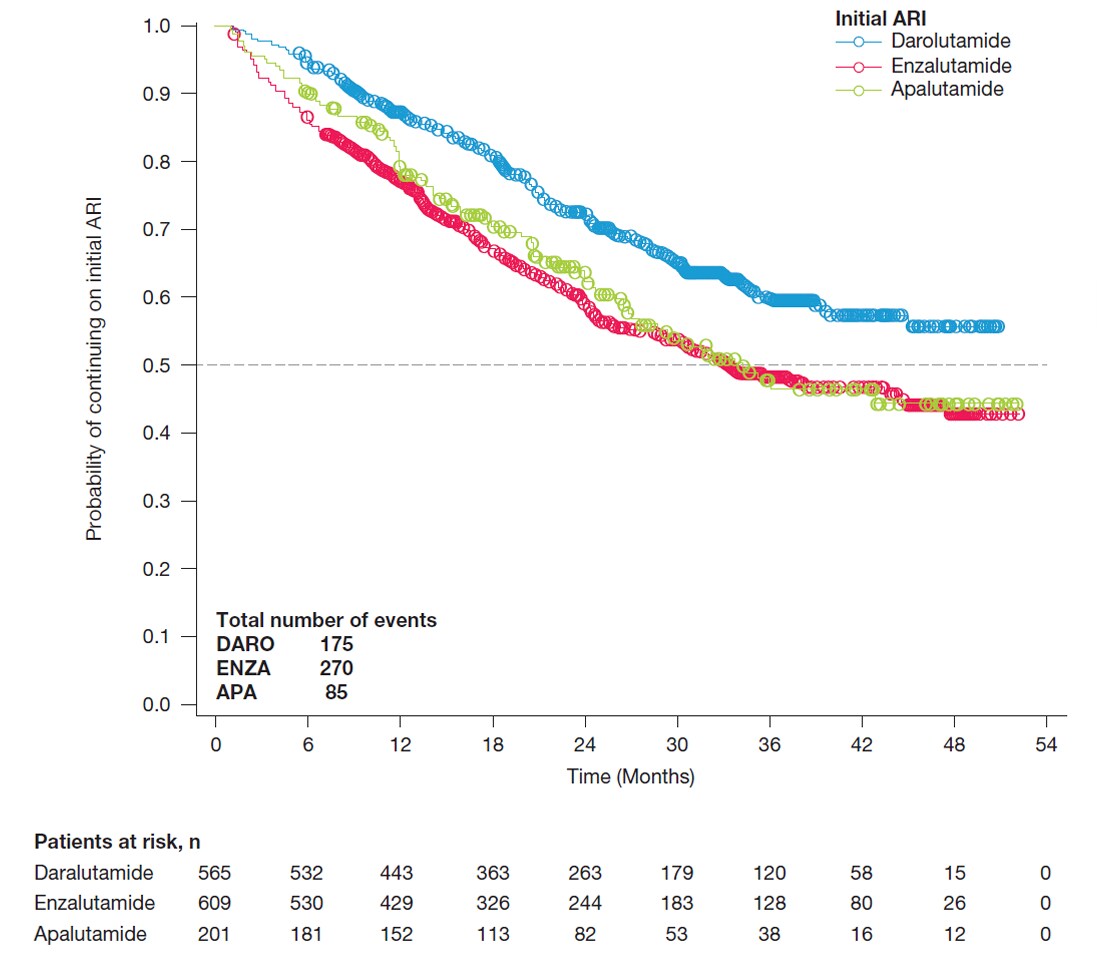
- MFS was also analyzed (Figure: MFS).
- In a Cox proportional hazards model adjusting for baseline factors, darolutamide-treated patients had a 35% (HR, 0.647 [95% CI, 0.529-0.791]) and 28% (HR, 0.716 [95% CI, 0.549-0.933]) reduced risk of metastasis or death compared with enzalutamide and apalutamide, respectively. The HR for MFS of enzalutamide compared to apalutamide was 1.107 (95% CI, 0.862-1.420) (Figure: Unadjusted and Adjusted Cox Proportional Hazards Models for MFS).
Figure. MFSa2
Key: APA, apalutamide; ARI, androgen receptor inhibitor; DARO, darolutamide; ENZA, enzalutamide; MFS, metastasis-free survival.
aMFS was calculated from index date to earliest of date of mCRPC progression or date of death (any cause).
Figure was published as Fig. 4 in George D, Morgans A, Khan N, et al. US real-world utilization and outcomes of darolutamide, enzalutamide, and apalutamide for nonmetastatic castration-resistant prostate cancer (nmCRPC): DEAR-EXT study. Poster presented at: American Society of Clinical Oncology (ASCO) Quality Care Symposium (QCS) Annual Meeting; September, 27-28, 2024; San Francisco, CA. [downloaded 15 January 2026] Copyrights remain with the original source or as denoted therein.
Figure. Unadjusted and Adjusted Cox Proportional Hazards Models for MFSa2
Key: APA, apalutamide; CI, confidence interval; DARO, darolutamide; ENZA, enzalutamide; HR, hazard ratio; MFS, metastasis-free survival.
aMFS was calculated from index date to earliest of date of mCRPC progression or date of death (any cause).
Figure was published as Fig. 4 in George D, Morgans A, Khan N, et al. US real-world utilization and outcomes of darolutamide, enzalutamide, and apalutamide for nonmetastatic castration-resistant prostate cancer (nmCRPC): DEAR-EXT study. Poster presented at: American Society of Clinical Oncology (ASCO) Quality Care Symposium (QCS) Annual Meeting; September, 27-28, 2024; San Francisco, CA. [downloaded 15 January 2026] Copyrights remain with the original source or as denoted therein.
- PSA response rates and OS probabilities at 12, 24, and 36 months were numerically higher for darolutamide vs enzalutamide and apalutamide (Table: PSA Response and OS Probability Over Time).
Table. PSA Response and OS Probability Over Time2
| Outcome | Darolutamide (n=565) | Enzalutamide (n=609) | Apalutamide (n=201) |
| PSA response, patients with event (%) | |||
| PSA90 | 65 | 64 | 61 |
| <0.2 ng/mL | 53 | 51 | 49 |
| OS, survival probability (%) | |||
| 12 months | 96 | 92 | 95 |
| 24 months | 88 | 78 | 86 |
| 36 months | 78 | 71 | 74 |
| Key: OS, overall survival; PSA, prostate-specific antigen; PSA90, ≥90% reduction in PSA from index date. | |||
Table was adapted from Table. 2 in George D, Morgans A, Khan N, et al. US real-world utilization and outcomes of darolutamide, enzalutamide, and apalutamide for nonmetastatic castration-resistant prostate cancer (nmCRPC): DEAR-EXT study. Poster presented at: American Society of Clinical Oncology (ASCO) Quality Care Symposium (QCS) Annual Meeting; September, 27-28, 2024; San Francisco, CA. [downloaded 15 January 2026] Copyrights remain with the original source or as denoted therein.
- TEAEs of interest occurring during ARI treatment are summarized in Table: TEAEs of Interests Occurring During ARI Treatment.
Table. TEAEs of Interests Occurring During ARI Treatment2
| Outcome, n (%) | Darolutamide (n=565) | Enzalutamide (n=609) | Apalutamide (n=201) |
| Any TEAE | 142 (25.1) | 173 (28.4) | 60 (29.9) |
| Any TEAE of interest | 92 (16.3) | 103 (16.9) | 42 (20.9) |
| Fatigue | 75 (13.3) | 81 (13.3) | 21 (10.4) |
| Fall | 4 (0.7) | 9 (1.5) | 1 (0.5) |
| Fracture | 0 | 0 | 0 |
| Rash | 13 (2.3) | 4 (0.7) | 15 (7.5) |
| Cognitive and memory impairment | 6 (1.1) | 10 (1.6) | 4 (2.0) |
| Hypertension | 2 (0.4) | 6 (1.0) | 2 (1.0) |
| Key: AE, adverse event; ARI, androgen receptor inhibitor; TEAE, treatment-emergent adverse event. aAEs commonly associated with ARI therapy. | |||
Table was adapted from Table. 3 in George D, Morgans A, Khan N, et al. US real-world utilization and outcomes of darolutamide, enzalutamide, and apalutamide for nonmetastatic castration-resistant prostate cancer (nmCRPC): DEAR-EXT study. Poster presented at: American Society of Clinical Oncology (ASCO) Quality Care Symposium (QCS) Annual Meeting; September, 27-28, 2024; San Francisco, CA. [downloaded 15 January 2026] Copyrights remain with the original source or as denoted therein.
Subgroup Analyses
Race Subgroup Analysis
Patient Characteristics
Patient characteristics by race subgroup (Black [n=282]; White [n=923]) are summarized in Table: Patient Baseline Characteristics and Demographics by Race Subgroup.3
Table. Patient Baseline Characteristics and Demographics by Race Subgroup3
| Characteristic | Black (n=282) | White (n=923) | ||||
| DARO (n=116) | ENZA (n=125) | APA (n=41) | DARO (n=375) | ENZA (n=407) | APA (n=141) | |
| Age, median (IQR), years | 79 (71-83) | 76 (70-84) | 76 (70-80) | 80 (74-86) | 80 (74-86) | 80 (74-86) |
| Insurance coverage, n (%) | ||||||
| Commercial | 35 (30.2) | 35 (28.0) | 11 (26.8) | 87 (23.2) | 100 (24.6) | 38 (27.0) |
| Public | 81 (69.8) | 86 (68.8) | 30 (73.2) | 255 (68.0) | 292 (71.7) | 102 (72.3) |
| Unknown | 0 | 4 (3.2) | 0 | 33 (8.8) | 15 (3.7) | 1 (0.7) |
| PSA, median (IQR), ng/mL | 4.1 (1.9-10.1) | 4.2 (1.4-10.7) | 4.9 (1.5-16.6) | 2.6 (0.9-5.9) | 2.8 (0.9-7.1) | 3.2 (1.0-5.7) |
| PSADT, median (IQR), months | 8.7 (5.6-13.7) | 6.5 (3.4-12.0) | 7.6 (5.5-11.1) | 6.5 (4.4-11.5) | 7.0 (3.8-12.2) | 6.9 (4.3-11.6) |
| Index year, n (%) | ||||||
| 2019 (Aug-Dec) – 2020 | 45 (38.8) | 68 (54.4) | 24 (58.5) | 170 (45.3) | 231 (56.8) | 71 (50.4) |
| 2021-2023 (Jan-Mar) | 71 (61.2) | 57 (45.6) | 17 (41.5) | 205 (54.7) | 176 (43.2) | 70 (49.6) |
| Gleason score at initial PC diagnosis, n (%) | ||||||
| 4-7 | 60 (51.7) | 49 (39.2) | 13 (31.7) | 174 (46.4) | 146 (35.9) | 57 (40.4) |
| 8-10 | 40 (34.5) | 42 (33.6) | 18 (43.9) | 144 (38.4) | 153 (37.6) | 62 (44.0) |
| Missing | 16 (13.8) | 34 (27.2) | 10 (24.4) | 57 (15.2) | 108 (26.5) | 22 (15.6) |
| Time from CRPC diagnosis to index data, median (IQR), months | 5.3 (1.3-19.2) | 3.7 (0.4-14.9) | 8.8 (2.1-18.7) | 4.8 (1.3-15.0) | 3.3 (0.4-15.8) | 3.4 (0.2-11.8) |
| Follow-up, median (IQR), months | 27.8 (17.0-36.5) | 25.5 (13.3-41.8) | 28.6 (15.4-41.5) | 26.2 (18.2-37.0) | 26.5 (15.5-38.4) | 25.5 (17.2-36.7) |
| Patients starting at full ARI dose, n (%) | 115 (99.1) | 120 (96.0) | 41 (100) | 361 (96.3) | 393 (96.6) | 139 (98.6) |
| Key: APA, apalutamide; ARI, androgen receptor inhibitor; CRPC, castration-resistant prostate cancer; DARO, darolutamide; ENZA, enzalutamide; IQR, interquartile range; PC, prostate cancer; PSA, prostate-specific antigen; PSADT, prostate-specific antigen doubling time. | ||||||
Table was adapted from Table. 1 in George D, Morgan A, Khan N, et al. Real-world use and outcomes of darolutamide (DARO), enzalutamide (ENZA), and apalutamide (APA) for nonmetastatic castration-resistant prostate cancer (nmCRPC): Race subgroup analysis. Poster presented at: American Society of Clinical Oncology Genitourinary (ASCO-GU) Annual Meeting; February, 13-15, 2025; San Francisco, CA. [downloaded 15 January 2026] Copyrights remain with the original source or as denoted therein.
Outcomes
- A total of 114 (40.4%) Black patients discontinued ARI treatment. A lower proportion of patients in the darolutamide group (32.8%) discontinued treatment compared to the enzalutamide (44.8%) and apalutamide (48.8%) groups. Median time to discontinuation for darolutamide, enzalutamide, and apalutamide, respectively, was NR, 25.5 months (95% CI, 21.6 months – NR), and 29.0 months (95% CI, 10.8 months – NR).
- In a Cox proportional hazards model adjusting for baseline factors, the risk of discontinuation was significantly lower for darolutamide compared to enzalutamide (HR, 0.62 [95% CI, 0.40-0.97]) and apalutamide (HR, 0.49 [95% CI, 0.28-0.88]). The HR for time to discontinuation of enzalutamide compared to apalutamide was 0.80 [95% CI, 0.47-1.37]).
- Reasons for treatment discontinuation (darolutamide vs enzalutamide vs apalutamide) included AEs (9.5% vs 10.4% vs 17.1%) and disease progression/death (11.2% vs 16.8% vs 14.6%).
- A total of 429 (46.5%) White patients discontinued ARI treatment. A lower proportion of patients in the darolutamide group (37.9%) discontinued treatment compared to the enzalutamide (53.1%) and apalutamide (50.4%) groups. Median time to discontinuation for darolutamide, enzalutamide, and apalutamide, respectively, was NR, 26.1 months (95% CI, 22.7-32.8), and 25.7 months (95% CI, 20.6-42.8).
- In a Cox proportional hazards model adjusting for baseline factors, the risk of discontinuation was significantly lower for darolutamide compared to enzalutamide (HR, 0.68 [95% CI, 0.54-0.85]) and apalutamide (HR, 0.72 [95% CI, 0.53-0.96]). The HR for time to discontinuation of enzalutamide compared to apalutamide was 1.05 (95% CI, 0.80-1.38).
- Reasons for treatment discontinuation (darolutamide vs enzalutamide vs apalutamide) included AEs (9.9% vs 17.4% vs 14.2%) and disease progression/death (16.3% vs 20.4% vs 19.8%).
- A total of 91 (32.3%) Black patients experienced an MFS event. A lower proportion of patients in the darolutamide group (25.9%) experienced an MFS event compared to the enzalutamide (35.2%) and apalutamide (41.5%) groups. Median MFS for darolutamide, enzalutamide, and apalutamide, respectively, was NR, 47.7 months (95% CI, 32.1 months - NR), and 34.5 months (95% CI, 20.8 months – NR).
- In a Cox proportional hazards model adjusting for baseline factors, the HR for MFS for darolutamide compared to enzalutamide was 0.79 (95% CI, 0.47-1.31); darolutamide compared to apalutamide was 0.67 (95% CI, 0.35-1.28). The HR for MFS for enzalutamide compared to apalutamide was 0.85 (95% CI, 0.47-1.55).
- A total of 390 (42.3%) White patients experienced an MFS event. A lower proportion of patients in the darolutamide group (33.6%) experienced an MFS event compared to the enzalutamide (49.1%) and apalutamide (45.4%) groups. Median MFS for darolutamide, enzalutamide, and apalutamide, respectively, was NR, 29.2 months (95% CI, 23.9-33.6), and 32.2 months (95% CI, 24.7 months – NR).
- In a Cox proportional hazards model adjusting for baseline factors, darolutamide-treated patients had a 40% (HR, 0.60 [95% CI, 0.47-0.75]) and 31% (HR, 0.69 [95% CI, 0.51-0.94]) reduced risk of metastasis or death compared with enzalutamide and apalutamide, respectively. The HR for MFS for enzalutamide compared to apalutamide was 1.16 (95% CI, 0.87-1.55).
LITERATURE SEARCH
A literature search of Embase®, PubMed, and/or other resources, including internal/external databases, was conducted pertaining to this topic on 15 January 2026.
REFERENCES
All the references were accessed on the abovementioned literature search date.
- George DJ, Morgans AK, Constantinovici N, et al. Androgen Receptor Inhibitors in Patients With Nonmetastatic Castration-Resistant Prostate Cancer. JAMA Netw Open. 2024;7(8):e2429783. PMID: 39190308 https://www.ncbi.nlm.nih.gov/pubmed/39190308
- George D, Morgans A, Khan N, et al. US real-world utilization and outcomes of darolutamide, enzalutamide, and apalutamide for nonmetastatic castration-resistant prostate cancer (nmCRPC): DEAR-EXT study. Poster presented at: American Society of Clinical Oncology (ASCO) Quality Care Symposium (QCS) Annual Meeting; September, 27-28, 2024; San Francisco, CA.
- George D, Morgan A, Khan N, et al. Real-world use and outcomes of darolutamide (DARO), enzalutamide (ENZA), and apalutamide (APA) for nonmetastatic castrationresistant prostate cancer (nmCRPC): Race subgroup analysis. Poster presented at: American Society of Clinical Oncology Genitourinary (ASCO-GU) Annual Meeting; February, 13-15, 2025; San Francisco, CA.
- Real-World Evidence. The United States Food and Drug Administration (FDA). Updated 22 September 2025. Accessed via https://www.fda.gov/science-research/science-andresearch-special-topics/real-world-evidence
- Di Maio M, Perrone F, Conte P. Real-World Evidence in Oncology: Opportunities and Limitations. Oncologist. 2020;25(5):e746-e752. PMID: 31872939 https://www.ncbi.nlm.nih.gov/pubmed/31872939
- Sarkar S, Seshadri D. Conducting record review studies in clinical practice. J Clin Diagn Res. 2014;8(9):JG01-4. PMID: 25386466 https://www.ncbi.nlm.nih.gov/pubmed/25386466
- Derman BA, Belli AJ, Battiwalla M, et al. Reality check: Real-world evidence to support therapeutic development in hematologic malignancies. Blood Rev. 2022;53:100913. PMID: 35272867 https://www.ncbi.nlm.nih.gov/pubmed/35272867
- Morgans A, Shore N, Khan N, et al. Comparative real-world evidence on darolutamide, enzalutamide, and apalutamide for nonmetastatic castration-resistant prostate cancer patients in the United States (DEAR). Poster presented at: American Society of Clinical Oncology (ASCO) Annual Meeting; June, 2-6, 2023; Chicago, IL.
- Raval AD, Lunacsek O, Korn MJ, Littleton N, Constantinovici N, George DJ. Real-World Evidence of Combination Therapy Use in Metastatic Hormone-Sensitive Prostate Cancer in the United States From 2017 to 2023. JCO Oncol Pract. 2025:OP2400690. PMID: 39919261 https://www.ncbi.nlm.nih.gov/pubmed/39919261
- Supplement to: George DJ, Morgans AK, Constantinovici N, et al. Androgen Receptor Inhibitors in Patients With Nonmetastatic Castration-Resistant Prostate Cancer. JAMA Netw Open. 2024;7(8):e2429783. PMID: 39190308 https://www.ncbi.nlm.nih.gov/pubmed/39190308


Follow Us